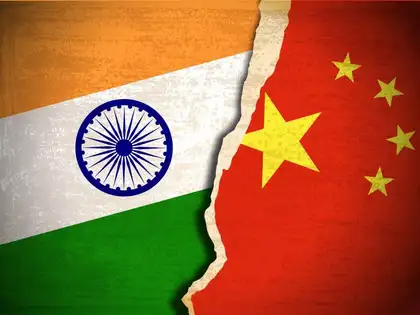
India has taken a significant step toward rebuilding economic and diplomatic ties with China by easing visa rules for Chinese business professionals. According to senior government officials, New Delhi has removed a key layer of administrative scrutiny and accelerated the processing of business visas to under four weeks. This marks one of the most important confidence-building moves between the two countries since their relationship deteriorated in 2020.
The decision reflects India’s shifting global strategy, especially as it responds to new geopolitical and trade pressures, including recent high U.S. tariffs on Indian goods. It also sends a strong signal to global investors: India is serious about improving the ease of doing business and strengthening supply chains.
Why This Change Matters
For several years, Indian industries—especially electronics—have struggled due to the difficulty Chinese professionals faced in securing visas. After the 2020 border clash, India expanded its vetting procedures, effectively blocking most Chinese business travel. While rooted in security concerns, the restrictions created unintended economic challenges.
A leading Indian think tank estimates that electronics manufacturers alone lost more than $15 billion in potential production over four years. This is because many companies depend on technicians and engineers from China to install, train, and maintain specialized manufacturing machinery. Without timely support, production slowed or stalled.
Major firms—including well-known Chinese electronics brands—publicly reported difficulties in obtaining visas. Solar power manufacturers also suffered due to shortages of skilled labour brought in from China for specific stages of installation and maintenance.
The revised visa policy removes these roadblocks.
What the New Rules Allow
Officials confirmed that:
A layer of administrative vetting has been removed.
Business visas for Chinese professionals will now be processed within four weeks.
The issue of visa delays has been “completely resolved.”
This streamlined process is expected to accelerate ongoing and upcoming projects across electronics, manufacturing, and renewable energy—sectors where Chinese technical expertise plays a vital role.
Industry reaction has been positive. The Indian Cellular and Electronics Association welcomed the move, emphasizing that it reflects a collaborative approach between industry and government, and supports India’s ambitions to scale up production of finished goods, sub-assemblies, and components.
A Diplomatic Reset Backed by High-Level Engagement
The policy shift follows Prime Minister Narendra Modi’s visit to China earlier this year—his first in seven years. During his meeting with President Xi Jinping, both leaders discussed ways to stabilize relations and strengthen economic cooperation.
Shortly after the meeting:
Direct flights between India and China resumed, ending a four-year suspension.
A high-level committee led by Rajiv Gauba, former cabinet secretary, reviewed and recommended easing restrictions that were affecting investment and business operations.
This committee’s work is part of a broader effort to reassure global investors who were increasingly concerned about India’s stringent curbs on Chinese entities.
The Global Context: U.S. Tariffs and India’s Strategic Pivot
The timing of India’s renewed outreach to China is not coincidental.
The U.S. recently imposed:
A 50% tariff on a range of Indian goods
An additional 25% penalty on India for purchasing Russian oil
These moves significantly reshape India’s trade landscape. Faced with rising uncertainty in its largest export market, India is recalibrating its diplomatic approach:
Rebalancing ties with China
Deepening cooperation with Russia
Continuing to work toward a trade agreement with the United States
By easing visa and investment restrictions on China, India signals that it wants to keep supply chains stable, maintain growth momentum, and reassure global companies that it remains committed to openness—on its own terms.
A Step Toward Long-Term Stability and Growth
Easing visa rules is not just a bureaucratic reform. It is a strategic move designed to:
Strengthen India’s position as a global manufacturing hub
Restore confidence among foreign investors
Stabilize key industries reliant on technical expertise
Lower production bottlenecks in sectors critical to India’s growth
Smoothen diplomatic tensions while keeping national interests at the forefront
As one senior official put it, India is “cautiously easing” restrictions in ways that improve the overall business environment without compromising security considerations.
The coming months will reveal how quickly these changes translate into higher production, increased investment, and more resilient industrial supply chains. But one thing is clear: India is signalling a pragmatic, growth-focused approach in an increasingly complex global economy.