
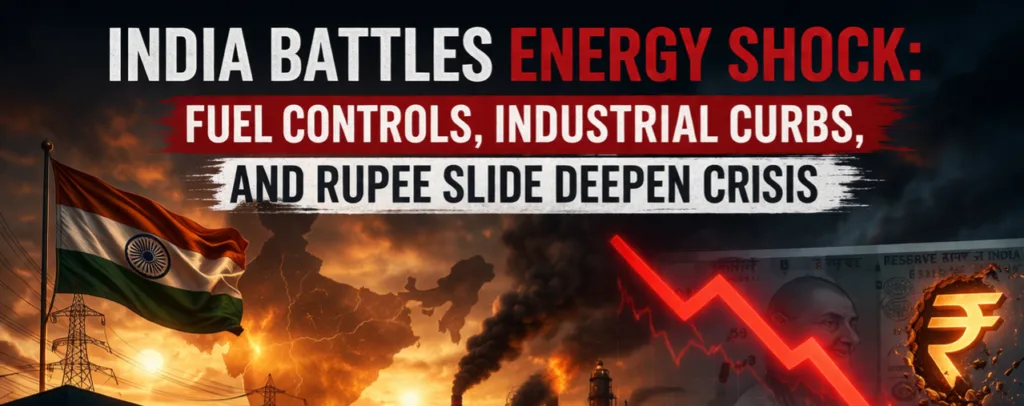
India is moving into crisis-management mode as the ongoing Iran war disrupts global energy supply chains and pushes domestic economic pressure to the forefront. With oil and gas flows from the Gulf under strain, the government is stepping in with a mix of industrial advisories, fiscal measures, and demand-side controls to stabilize the situation.
At the center of this response is the auto sector—one of India’s largest industrial consumers of fuel. The Ministry of Heavy Industries has urged automakers and suppliers to optimize production and reduce dependence on oil-based energy. Companies are being encouraged to shift toward electricity wherever possible and increase the use of recycled materials like aluminum to ease pressure on both fuel and raw material demand.
Industrial Strategy: Auto Sector Faces Fuel Rationalization Mandate
Production Optimization and Energy Substitution
The Ministry of Heavy Industries has issued a formal advisory urging automobile manufacturers and component suppliers to rationalize production cycles and reduce fuel dependency. The directive emphasizes:
- Transition from oil-based fuels to electricity where feasible
- Increased adoption of recycled inputs, especially aluminum
- Operational efficiency to reduce energy intensity per unit output
This comes amid early signs of supply stress, with ancillary suppliers reporting intermittent gas shortages.
Demand Resilience vs Supply Constraints
Despite robust vehicle demand, manufacturers such as Maruti Suzuki, Tata Motors, and Mahindra & Mahindra face a tightening input environment. The policy push reflects a preemptive attempt to prevent industrial disruption if fuel shortages escalate further.
Fiscal Measures: Export Controls and Domestic Relief
Fuel Export Duties Imposed
To preserve domestic availability, the government has introduced:
- ₹29.5/liter export duty on Aviation Turbine Fuel (ATF)
- ₹21.5/liter export duty on Diesel
These measures aim to redirect supply inward and mitigate domestic shortages.
Excise Duty Cuts for Consumers
Balancing the export curbs, the government has reduced central excise duty by:
- ₹10/liter on petrol
- ₹10/liter on diesel
This dual approach reflects a calibrated attempt to contain inflationary pressures while safeguarding energy access.
Currency Market Stress: Rupee Under Pressure
Sharp Depreciation Trend
The Indian rupee has weakened significantly, breaching the 94 per dollar mark and touching 94.2950. Key trends include:
- ~3.5% depreciation since onset of the conflict
- Over 10% decline since March 2025
- Worst annual performance since the 2013 taper-induced volatility
The currency movement reflects broader macro stress as India navigates external shocks.
The depreciation is being driven by a rising import bill, capital outflows, and growing pressure on India’s current account. In simple terms, the country is paying more for energy while earning relatively less in foreign inflows—a combination that weighs heavily on the currency.
Looking ahead, much depends on how long the geopolitical tensions persist. A prolonged disruption could keep commodity prices elevated, squeeze industrial margins, and force further policy intervention.
For now, India is walking a tightrope—trying to protect growth while ensuring stability in the face of a global energy shock.
