
Executive Summary
The Indian healthcare sector is witnessing a structural transformation with increasing specialization and institutionalization of niche medical services. One of the fastest-growing verticals within this transformation is fertility treatment and assisted reproductive technology (ART).
The IPO of Gaudium IVF and Women Health Limited represents a rare opportunity for investors to gain exposure to this rapidly expanding segment of healthcare.
The company launched a ₹165 crore IPO with a price band of ₹75–₹79 per share, valuing the business at approximately ₹550–₹580 crore at the upper band.
This IPO is particularly interesting because fertility services have historically been dominated by private clinics and private equity-backed chains, with limited public market exposure.
For investors, the Gaudium IVF IPO raises three critical questions:
Is the fertility industry in India large enough to sustain long-term growth?
Does Gaudium IVF possess the scale and operational model required for public markets?
Is the IPO valuation justified given its financial performance and growth potential?
This article provides a comprehensive institutional-grade analysis covering:
IVF industry growth dynamics
Company financial performance
Fertility clinic economics
Competitive positioning
IPO valuation framework
Long-term growth catalysts
Gaudium IVF IPO: Issue Details
| Parameter | Details |
|---|---|
| IPO Size | ₹165 crore |
| Fresh Issue | ₹90 crore |
| Offer for Sale | ₹75 crore |
| Price Band | ₹75 – ₹79 |
| Lot Size | 1,600 shares |
| Issue Opening | February 2026 |
| Listing | NSE SME platform |
| Estimated Market Cap | ~₹575 crore |
The IPO proceeds are expected to be used primarily for:
Expanding fertility clinic infrastructure
Establishing new IVF laboratories
Repaying debt obligations
Working capital requirements
Expansion into underserved regions is expected to be a key growth strategy post listing.
Company Overview
Background
Gaudium IVF and Women Health Limited is a specialized fertility treatment provider offering assisted reproductive technology (ART) services and women’s healthcare solutions.
The company was founded by Dr. Manika Khanna, a fertility specialist with over 16 years of experience in reproductive medicine.
The organization focuses on delivering:
Advanced fertility treatments
Personalized patient care
Modern embryology labs
High IVF success rates
Current Operational Footprint
| Metric | Data |
|---|---|
| IVF Centres | 7 |
| Satellite Clinics | 28 |
| Cities Served | Multiple across India |
| Babies Delivered | 30,000+ |
The company’s hub-and-spoke model allows a central IVF laboratory to support multiple consultation centres.
This reduces infrastructure costs while improving operational efficiency.
Understanding the IVF Industry
The IVF industry is driven by powerful demographic and lifestyle shifts.
Globally, assisted reproductive technology has evolved into a multi-billion dollar healthcare industry.
Global Fertility Market
The global fertility services market is estimated at:
$25–30 billion in 2025
Expected CAGR of ~10–12%
Major markets include:
United States
Europe
Japan
China
India
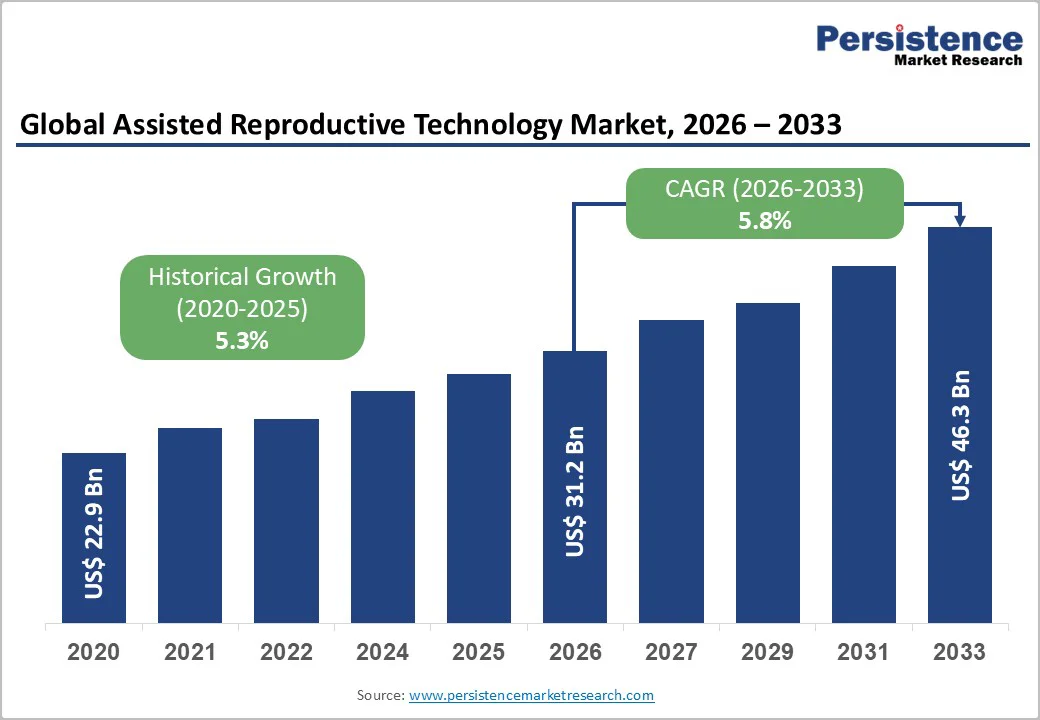
Developed countries have significantly higher IVF penetration rates compared to emerging markets.
India IVF Market Size
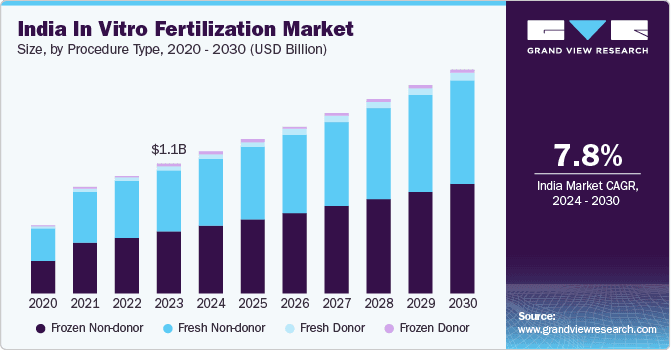
India’s IVF market has been expanding rapidly.
| Metric | Estimate |
|---|---|
| Market Size (2025) | ~$1.4 billion |
| Expected Market (2034) | ~$4–5 billion |
| CAGR | ~16% |
Despite strong growth, India remains significantly underpenetrated compared to global markets.
IVF Penetration Gap
| Region | IVF Cycles per Million Population |
|---|---|
| Japan | ~2,500 |
| Europe | ~1,200 |
| US | ~1,000 |
| India | ~250 |
This massive penetration gap suggests long-term structural growth potential.
Key Demand Drivers of Fertility Treatments
Rising infertility rates
Studies suggest 10–15% of couples experience infertility.
Urban lifestyle factors such as stress, obesity, and environmental pollution are contributing to rising infertility rates.

Delayed parenthood
Urban professionals increasingly delay childbirth until their mid-30s, which significantly increases demand for fertility treatments.
Increased IVF awareness
Cultural acceptance of IVF treatments has improved dramatically over the last decade.
Medical tourism
India offers IVF treatments 30–60% cheaper than Western markets, attracting international patients.
Competitive Landscape
India’s fertility services industry remains fragmented but is gradually consolidating.
Major fertility chains include:
Indira IVF
Nova IVF Fertility
Apollo Fertility
Competitive Positioning
| Company | Strategy |
|---|---|
| Indira IVF | Large nationwide network |
| Nova IVF | Premium technology-driven fertility care |
| Apollo Fertility | Hospital-integrated fertility services |
| Gaudium IVF | Premium specialist clinic network |
Compared to competitors, Gaudium IVF currently operates at smaller scale but with premium positioning.
Business Model Breakdown
Fertility clinics generate revenue through multiple services.
Primary Revenue Driver: IVF Cycles
Average IVF treatment cost in India:
₹1.5 lakh – ₹2.5 lakh per cycle
Success rates vary between 30% and 50% per cycle, often requiring multiple attempts.
This creates recurring revenue opportunities.
Additional Revenue Streams
Fertility clinics also generate revenue from:
Fertility consultations
Diagnostic testing
Egg freezing
Embryo storage
Genetic testing
Male infertility treatment
Typical Revenue Mix
| Service | Revenue Contribution |
|---|---|
| IVF cycles | 50–60% |
| Diagnostics | 15–20% |
| Fertility procedures | 10–15% |
| Storage & preservation | 5–10% |
Unit Economics of IVF Clinics
One reason investors are increasingly interested in fertility chains is their attractive economics.
Setup Cost
Estimated cost of establishing a fertility clinic:
₹4 crore – ₹8 crore
Breakdown:
| Cost Component | Estimate |
|---|---|
| IVF laboratory setup | ₹1.5–2 crore |
| Medical equipment | ₹1–1.5 crore |
| Infrastructure | ₹1–2 crore |
| Licensing & setup | ₹50 lakh |
Revenue Potential per Clinic
Average fertility clinic annual revenue:
₹8 crore – ₹15 crore
Payback Period
Typical payback period:
2–3 years
This makes fertility clinics high-return healthcare assets.
Financial Performance
| Metric | FY23 | FY25 |
|---|---|---|
| Revenue | ₹44 crore | ₹70 crore |
| Net Profit | ₹13 crore | ₹19 crore |
| EBITDA Margin | ~40% | |
| Return on Equity | ~41% |
These numbers suggest strong profitability relative to healthcare industry averages.
Valuation Analysis
At the upper IPO band of ₹79 per share, the company’s valuation is approximately ₹575 crore.
Estimated Multiples
| Metric | Estimate |
|---|---|
| Price/Earnings | ~30x |
| EV/EBITDA | ~14–16x |
Healthcare specialty chains typically trade between 15x–25x EBITDA, suggesting Gaudium is priced within industry range.
IPO Use of Proceeds
The company plans to use IPO funds to:
Open 19 new IVF clinics
Expand embryology labs
Repay debt (~₹20 crore)
Strengthen brand presence
Expansion will likely focus on Tier-2 cities where fertility services remain limited.
Key Risks Investors Must Consider
Doctor dependency risk
Fertility specialists and embryologists are critical to clinic success.
Losing key doctors can impact patient volumes.
Reputation risk
Fertility success rates strongly influence brand credibility.
Negative publicity could affect growth.
Competition
Large hospital chains and private equity-backed fertility networks may intensify competition.
Regulatory risk
Fertility clinics operate under evolving ART regulations.
Policy changes could impact industry economics.
Post-IPO Growth Catalysts
Several structural trends could drive future growth.
Tier-2 City Expansion
Fertility services remain concentrated in major metropolitan areas.
Expanding into smaller cities could significantly increase demand.
Egg Freezing Demand
Career-focused professionals increasingly opt for fertility preservation.
Corporate Fertility Benefits
Large corporations are beginning to include fertility treatment coverage in employee health plans.
AI in Fertility Diagnostics
AI-based embryo selection technologies are improving IVF success rates.
Final Investment Verdict
The Gaudium IVF IPO represents a unique opportunity to invest in India’s growing fertility services industry.
Key positives include:
High-margin healthcare services
Strong sector growth
Attractive clinic economics
However, investors should monitor:
Execution of clinic expansion
Competition from larger fertility chains
Ability to scale while maintaining high success rates
Investor Recommendation
Neutral to Moderately Positive
Investors seeking exposure to emerging specialty healthcare sectors may consider the IPO for long-term growth potential.
However, position sizing should account for scale and execution risks.
