
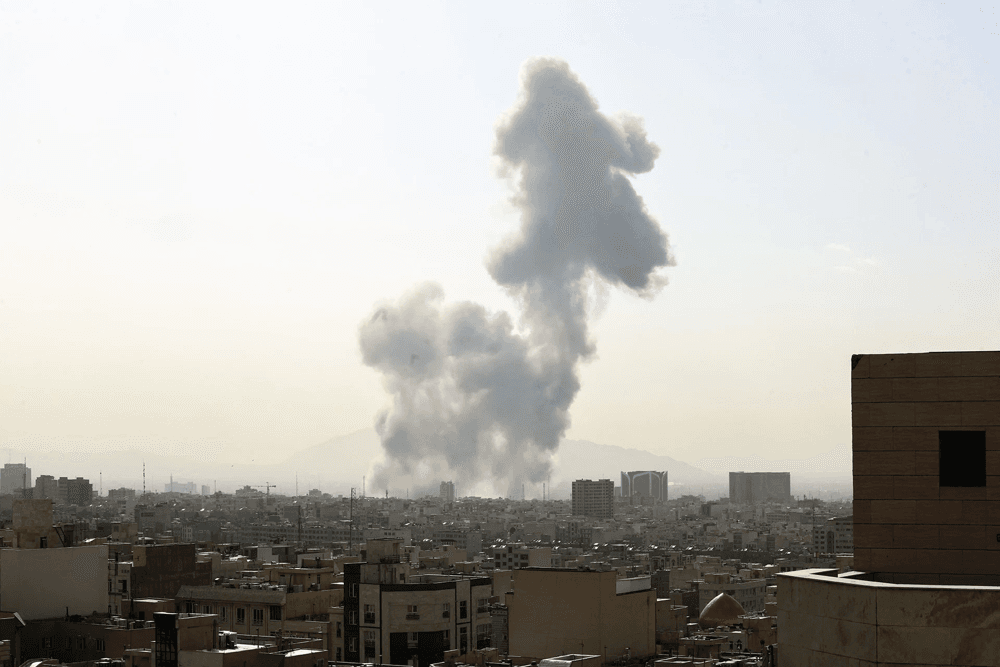
Recent U.S. and Israeli airstrikes against Iran (called “Operation Epic Fury”) have dramatically heightened regional tensions. On February 28-29, U.S. and Israeli forces attacked several sites in Iran, reportedly including a compound belonging to Iran’s Supreme Leader, killing Iran’s Ayatollah Khamenei. In retaliation, Iran launched missile and drone strikes into Israel and U.S. bases throughout the Gulf Region. The actions of Iran’s Revolutionary Guard subsequently resulted in effectively closing the Strait of Hormuz to tanker traffic. As a result of these developments, the Middle East is now involved in an openly hostile conflict with oil exporters suspending shipments; prior to this series of airstrikes, global markets were already anxious about potential de-escalation from U.S.-Iran diplomacy; now, with the latest airstrikes, it appears there will be no further prospects for de-escalation in the near term.
Stock Market Reaction
Overall Stock Market Indices: The opening of global stock indices was very negative (U.S. stock futures had dropped sharply). There was negative global sentiment (accounting for most losses experienced). On February 27th, global stock indices were just closing down after an exceptionally negative month of February (U.S. indices were down S&P 500 to -43%; NASDAQ to -92%). There was negative sentiment in European and Asian stocks (down by an estimated 50% from Friday). U.K. FTSE 100 had previously reached record highs and was expected to be down ~0.5% at market open on February 28th. The Nikkei and other Asian indices opened lower on February 28th (the lower performance of Asian indices was attributed to Asian markets having closed over the previous month’s annual holiday). Again, there was very little in terms of positive sentiment or performance in global equities after geopolitical events.
Sector Performance: The decline in equity prices after February 27th was primarily driven by technology and growth stocks (with people taking advantage of profit taking prior to geopolitical events). NVIDIA stock was down ~3.5% on February 27th due mainly to elevated market valuations. Stocks associated with travel, tourism and airlines experienced the largest decline as a result of fears due to increased fuel costs and cancellations. In contrast to the aforementioned sectors, oil suppliers and utility companies experienced significant increases in stock prices due to rising oil prices due to expected increased military spending. For example, despite the overall drop in Saudi Arabian equity indices (and therefore Saudi Aramco), U.S.-based companies involved in the defence sector (i.e. Lockheed Martin) benefited from similar performance trends. While many analysts agree that current equity share price increases are historically large (with Barclays warning against purchasing securities purchased; however, their projections suggest that these shares might rebound once investors have discounted away their worst fears).
Capital Markets & Banking
Major Banks experienced a significant sell-off in their stock prices. In the US, for example, Goldman Sachs fell approximately 7.5% on February 27 at the close of business on that day; similarly, credit card companies were also down 7% or more. Banks throughout Asia and Europe were also under pressure as a result of a risk-off trading mentality, and Gulf banks were heavily damaged as well; for instance, Al Rajhi Bank in Saudi Arabia fell approximately 3% because of concerns about the price of oil.
Investors moved into more secure instruments during the conflict. Bond prices rose dramatically, and yields on treasury bonds fell to record low levels (the lowest level since 2022 was seen). The US dollar was initially weak relative to other major currencies as investors bought currencies with less risk (Swiss Franc and Japanese Yen were both up on March 1). Gold and silver also moved higher: gold closed up approximately 2%-3% during trading over the weekend on March 1 and is now approaching $5,400/oz. In contrast, there were many outflows of riskier assets (common stocks and corporate debt) during this same period. Cryptocurrency markets also sold off significantly last week (Bitcoin was down approximately 10% over the weekend).
Capital movement: A number of Gulf-Based investors withdrew investment funds and hedged against future risks. Kuwait’s equity market was completely closed (due to “exceptional conditions”) but Saudi, UAE or Egypt stock exchanges opened with a large decline. Many Western fund managers reported substantial increases in inflows into U.S. Treasury securities and gold-based ETFs. In addition, many fund managers noted that if an extended period of sharply rising oil prices caused a significant increase in U.S. interest rates and large-scale outflows from emerging market countries (such as Brazil and India), even currently valued economies will likely experience outflows.
Wider Economic Risks
The increase in Oil Price: The battle has impacted the price of oil. By mid-February and March, Brent crude oil shot up approximately 10% and above the mid-$70 range and has the potential to continue to climb. If 20% of the global oil supply is transported through the Strait of Hormuz, a long-term shutdown would likely result in Brent crude being between $80-$100. Analysts with Barclays and RBC have projected crude oil prices of $80 or greater due to a reduction in Gulf oil supplies. The higher oil prices will also be immediately reflected in the price of fuel for global consumers. (Although there were various OPEC+ members who offered to produce additional oil, experts indicate that reductions in supply and a rise in insurance will more than compensate for any proposed increase in supply.)
Inflation Expectations: The increase in oil prices will also drive inflation higher. RBC projects an increase to $100/barrel would add between 0.6-0.7 percent to global inflation. Countries that import oil will see substantial increases in consumer prices (an example being gasoline). Breakeven rates in the bond market have widened; and expectations for U.S. Federal Reserve interest rates to be lowered have decreased. According to Saxo Bank, should oil rise to approximately $90/barrel, it will impact the Federal Reserve’s decision on whether to lower interest rates in 2026 and result in entrenched hawkish monetary policy. As a result, it appears that inflation suppression will follow a consistent trend; as a matter of fact, it is possible that central banks will suspend the planned easing of monetary policy in the event that oil prices rise significantly.
Geopolitical risk premiums: The market’s volatility as a whole is an issue. The costs of marine insurance are skyrocketing and a greater “risk premium” associated with Middle Eastern trade is being priced in. There have also been widening of credit-default swaps on Gulf States. Analysts believe that any amount of disruption will permanently keep the “war-risk” premium inflated; thus increasing borrowing costs for emerging economies and oil-importing countries, as well as tightening global financial conditions.
Recession triggers: A significant war could negatively impact economic growth. In the case of a contained event, the IMF/IMPACT figure could be low; however, if the situation escalates, the consequences could potentially cause the global economy to enter a recession. According to Ernst & Young, a major U.S.-Iran conflict could reduce global GDP by nearly 1.9% within one year. Even a “moderate” escalation could reduce global GDP by 0.5% due to increased costs associated with the escalating violence and disruption of trade. (For reference, a 10% rally in oil prices typically subtracts a couple of tenths from real GDP because of decreased consumer expenditure.) The combination of elevated energy prices, loss of confidence and tightening of financial conditions would increase the likelihood of a recession globally if military hostilities continue unabated.
Impact on Indian Economy
The current situation arising from increased tensions between the United States, Israel, and Iran will have a significant impact on India for several reasons. First, because India imports approximately 85 percent of its crude oil needs, and because a majority of these imports are priced against benchmarks such as Brent Crude, any disruption along the Strait of Hormuz or sustained high prices (e.g. approaching $90 to $100 per barrel) will dramatically increase India’s total oil import costs, creating larger imbalances in the current account and putting pressure on the Indian Rupee to depreciate. A depreciation of the rupee will lead to a higher rate of imported inflation, with fuel, fertiliser, transport, and manufacturing inputs being most affected, which will in turn be reflected in both wholesale price and consumer price indices. Should prices and inflation start to escalate as described above, this could complicate the Reserve Bank of India’s (RBI) policy response, potentially forcing a delay in the implementation of any interest rate cuts or perhaps maintaining a tighter liquidity environment in order to preserve the value of the Indian rupee. Stocks will likely face volatility regarding Indian stock markets such as the SENSEX and NIFTY50 as foreign institutional investors (FIIs) will start to sell stocks out of fear of global recession; and this sentiment would also impact banks, airlines, and paint companies, all of which are sensitive to crude oil prices. However, oil marketing companies may also see some margin compression if there is a cap on retail prices due to political reasons. Moreover, the higher global price of crude oil will create additional financial difficulties for different governments, due to the increased subsidy burden of LPG fuel and fertilisers that will expand deficits of these governments. If there is a significant decrease in the level of economic activity due to a prolonged shock, it would slow GDP growth through lower disposable income for households, falling financial conditions, and lower profitability for corporations in India; however, the diversified sources of imports and strategic oil reserves in India would help to mitigate some short-term disruptions.
Conclusion
The current military escalation between the US, Israel, and Iran poses a large worldwide macroeconomic threat through increased energy prices, worsening market volatility, and tightening financial markets. Extended movement in the price of benchmarks such as Brent Crude oil might cause global inflation to accelerate, delaying monetary policy easing by organizations like the Fed, and raising the risk of recession by decreasing consumer spending and corporate profitability. Equity markets will continue to see volatility due to high geopolitical risk premiums, capital flight to safe-haven securities (e.g., Treasuries), and economic stress in energy-importing countries. In the end, the magnitude and duration of the conflict will determine whether its effects remain a short-term shock that can be absorbed by resilient global markets or develop into a more broad-based, long-term drag on global economic growth.
Bibliography
- (2026). Global markets react to escalating US–Israel–Iran tensions and oil price surge.
- (2026). Oil climbs as Middle East conflict raises supply disruption fears.
- International Monetary Fund. (2025–2026). World Economic Outlook Update.
- World Bank. (2025). Global Economic Prospects.
- Federal Reserve. (2026). Monetary Policy Report.
- European Central Bank. (2026). Economic Bulletin.
- Reserve Bank of India. (2026). Monetary Policy Statement.
- S. Energy Information Administration. (2026). Short-Term Energy Outlook.
- International Energy Agency. (2026). Oil Market Report.
- S&P 500, FTSE 100, Nikkei 225 – Market performance data referenced from official exchange and financial reporting platforms.
